
Appliance Control Board Replacement and Repair — Oven, Washer, Dryer, Fridge and Dishwasher
Oven, washer, dryer, refrigerator and dishwasher control boards. Work out whether the board is really the fault, test it before you spend anything, then repair the one you have or fit a replacement.
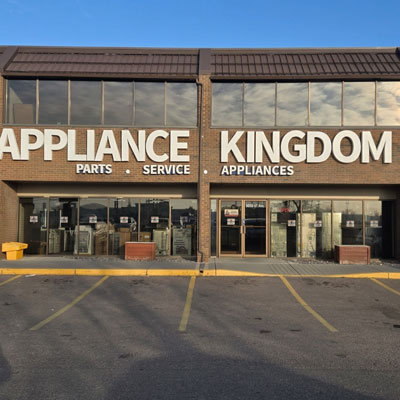 Appliance Kingdom · 9058 51 Ave NW, Edmonton
Appliance Kingdom is a family-owned appliance store in Edmonton with a parts counter, a warehouse and a showroom. We supply appliance parts and appliances across Alberta and beyond, and electronic control boards are among the parts customers ask about most — usually because the board they need has been discontinued, or because the price of a new one is close to the value of the machine. For the parts counter generally, see appliance parts in Edmonton. To talk to us about a specific board, contact us with your model number.
How to Tell if the Control Board Is Actually the Problem
This is the part worth getting right, because an electronic control board is one of the most expensive parts in any appliance and it is also the part most often replaced unnecessarily. A failed board produces symptoms that look like several much cheaper faults. Below are the common control board problems and the symptoms that genuinely point at the board, appliance by appliance — use it as a troubleshooting checklist before you buy anything.
Oven Control Board Symptoms
- the oven control board display is blank, dim or flickering
- the oven will not heat but the burners still work, or the reverse
- the touch pad or keypad does not respond, or responds to the wrong button
- the oven ignores the temperature you set, or runs far hotter or cooler than the display
- the clock resets itself, or an F-code error appears and returns after a reset
- the oven turns on by itself, or will not switch off
An oven control board, sometimes called the electronic range control or ERC, is the most commonly failed board we see. Heat is the reason: the board sits directly above a cavity that runs at 200 C and more, and the relays and solder joints on it fatigue over years of that cycle. A wall oven control board, a gas stove control board and an electric range control board all fail in the same way and for the same reason.
Washing Machine Control Board Symptoms
- the washer fills but will not start the cycle, or starts and stops
- the machine will not drain or will not spin, with no mechanical fault found
- the cycle lights flash in a pattern, or all light up at once
- the washer control board display shows an error code that returns after a power cycle
- buttons do not respond, or the machine skips straight to the end of the cycle
- the washer runs continuously and will not advance to the next stage
A faulty control board on a washing machine is often confused with a failed drain pump, lid switch or door lock, and those are far cheaper to replace. Rule them out first — the tests below will tell you which one you are dealing with.
Dryer Control Board Symptoms
- the dryer will not start, though the door switch and thermal fuse test fine
- the drum turns but there is no heat, or heat that will not switch off
- the dryer control board panel is dead, or only some buttons respond
- the cycle ends after a few minutes regardless of the setting
- the dryer starts on its own when the door is closed
- moisture sensing never completes and the load stays damp
On a dryer, always test the thermal fuse and the door switch before condemning the board. Dryer control board symptoms overlap almost exactly with a blown thermal fuse, and a fuse costs a fraction of a board.
Refrigerator Control Board Symptoms
- the fridge or freezer is warm while the compressor never runs
- the defrost cycle never runs, so the evaporator ices over and airflow stops
- the dispenser, ice maker or display panel is dead
- the temperature display will not hold the setting you enter
- the fridge runs constantly and never cycles off
- the lights work but nothing else on the board responds
A refrigerator control board is usually mounted at the back of the cabinet behind a metal cover. Before ordering one, check the start relay and the defrost thermostat — both produce very similar symptoms and both cost far less.
Dishwasher Control Board Symptoms
- the dishwasher will not start, or starts and drains immediately
- the cycle lights blink in a repeating pattern
- the dishwasher control board will not accept a cycle selection
- the machine stops part way through and holds water
- the control panel is unresponsive or only partly responsive
- the dishwasher runs but never heats the water
On a dishwasher the control board and the touch panel are separate parts on many models, and the panel is the more common failure. Confirm which one has gone before you buy either.
Microwave Control Board Symptoms
- the touch pad is dead, or only some pads respond
- the display is lit but the microwave will not start
- the microwave runs as soon as the door is closed
- the turntable and light work but there is no heating
- the unit shuts off part way through and shows an error
- the fan or vent runs on its own and will not stop
On an over-the-range microwave the control board and the touch membrane are usually separate parts. Before either, check the door interlock switches — they are a common failure and they produce exactly these symptoms.
Across all six, the tests in the next section apply in the same way.
Testing the Control Board Before You Spend Anything
Five checks, in this order. They cost nothing and they rule out the cheap faults that imitate a bad control board.
1. Cut the power and reset it properly
Switch the appliance off at the breaker rather than at the machine, and leave it off for five minutes so the board discharges fully. Restore power and run the cycle again. If the fault clears and does not come back, it was a glitch rather than a failure. If it returns within a cycle or two, the board has a hardware fault and resetting it again will not change that. This is what people mean by a control board reset, and it is always the first step.
2. Look at the board itself
With the power off, remove the board and look at both sides under good light. You are looking for four things: browned or cracked solder joints, usually around the relays; capacitors with a domed or split top, or any sign of leakage; burn marks or carbon tracking; and corrosion from moisture or insect ingress. Any one of these confirms the board rather than the components around it.
3. Find the board and read the blinking code
Control board location varies by appliance. On an oven or range it is behind the control panel at the top of the fascia. On a washing machine it is usually under the top panel at the rear, with a separate user interface board behind the console. On a dryer it sits behind the control console. On a refrigerator it is at the back of the cabinet behind a metal cover, and on a dishwasher it is behind the kick panel at the base or inside the door. Many boards signal the fault themselves: a blinking or flashing light in a repeating pattern is an error code, and the number of blinks before the pause is the code number. Your model manual will list what each one means, and it often names the failed component directly.
4. Check the board fuse
Many boards carry a small onboard fuse, and a blown one presents exactly like a dead board. Test it for continuity. This single check saves a number of unnecessary board purchases.
5. Test the cheaper parts first
| Appliance | Test these before the board |
|---|---|
| Oven, range, stove | Bake and broil elements, igniter, temperature sensor, door lock motor, thermal fuse |
| Washer, washing machine | Lid switch, door lock, drain pump, motor coupling, water inlet valve |
| Dryer | Thermal fuse, door switch, start switch, heating element, cycling thermostat |
| Refrigerator, freezer | Start relay, defrost thermostat, defrost heater, evaporator fan motor |
| Dishwasher | Touch panel, door latch switch, drain pump, heating element |
Repair the Board, Replace the Board, or Replace the Appliance
Once you know the board is the fault there are three routes, and which one makes sense depends almost entirely on how old the appliance is and whether the part is still made.
| Route | When it makes sense | What to watch |
|---|---|---|
| Repair the existing board | The appliance is sound, but the board is discontinued or a new one costs an unreasonable share of what the machine is worth. Common on appliances roughly eight years old and up. | Not every board is repairable. Severe burn damage or a failed microcontroller can end it. |
| Fit a replacement control board | The part is still manufactured and reasonably priced, and you want the appliance working again quickly. | One model can ship with several board revisions. The part number on your board matters more than the model number. |
| Replace the appliance | The board cost approaches half the price of a comparable new machine, or the appliance already has other faults. | Worth costing against an open-box or scratch-and-dent unit rather than full retail. |
One thing worth checking before you pay for anything: search your appliance model number together with the word recall. Manufacturers have issued recalls and extended warranties on specific control boards, and if yours is covered the fix may cost you nothing at all.
On cost: what an oven control board costs, or a dryer control board replacement, varies widely by brand, by model and by whether the part is OEM, remanufactured or an aftermarket equivalent. Anyone quoting a single figure without your part number is guessing. Send us the number from the board and we will tell you what exists for it.
If replacing the appliance turns out to be the sensible route, that is worth pricing properly before you accept it. See appliances in Edmonton for new, open-box, scratch-and-dent and clearance stock, or go straight to ranges, washers, dryers, refrigerators and dishwashers.
Control Boards We Handle, by Appliance and Brand
Electronic control boards go by several names depending on the appliance and the manufacturer — control board, circuit board, PCB, main board, power board, user interface board, and on ovens the electronic range control or ERC. They are all the same class of part and they all fail in the same ways.
Oven, range and stove boards
Electronic range control boards, oven relay boards, wall oven control boards, gas stove control boards, cooktop control boards and oven touch panels. The highest-failure category of the five, because of the heat they sit above.
Washer control boards
Main control boards, motor control boards and user interface boards for both top-load and front-load washing machines, including the interface boards that fail separately from the main board on many models.
Dryer control boards
Main control boards, moisture-sensing boards and user interface boards for electric and gas dryers.
Refrigerator and freezer boards
Main control boards, defrost control boards, inverter boards, dispenser boards and display boards for refrigerators, upright freezers and chest freezers.
Dishwasher control boards
Main control boards and touch control panels, which on many models are separate parts with separate part numbers.
Microwave and ventilation boards
Control boards and touch panels for over-the-range microwaves and range hoods.
Brands. Whirlpool, Frigidaire, GE, Kenmore, Samsung, Maytag, LG, Amana, KitchenAid, Bosch, Electrolux, Jenn-Air, Inglis, Danby, Blomberg, Thermador, Viking, Speed Queen, Hotpoint, Magic Chef, Haier, Dacor, Miele and Admiral, and Fisher & Paykel. If your brand is not on that list, ask anyway — the board is often made by a third party who supplies several badges.
Model lines we are asked about most
Within those brands, a handful of model lines account for most of the control board enquiries we take. Kenmore Elite, and the Kenmore HE2, HE3 and HE5 series. Whirlpool Duet, Cabrio, Gold and Epic. Frigidaire Gallery, Frigidaire Affinity and Frigidaire Professional. GE Profile, GE Cafe and GE Adora. Maytag Bravos, Maytag Neptune and Maytag Centennial. Samsung VRT. LG WaveForce. GE Monogram and KitchenAid Superba. Kenmore HE4, Maytag 3000 series, Maytag Bravos XL and Whirlpool Duet Sport. Also the commercial and imported lines that are harder to source parts for, including Dexter, Blomberg and Danby. Where the board itself is sound but the touch membrane has worn through, a control board overlay is a separate part and is often all that is needed. If you are tracing a fault yourself, the wiring diagram for your model is usually tucked inside the appliance behind the lower panel. Double oven control boards, stackable washer dryer control boards and washer dryer combo boards all fall under the same categories above — a double wall oven simply carries two cavities off one board on most models.
What to Do Next
Whether the answer is a repair, a replacement board or a different appliance altogether, it starts the same way: we need to know exactly which board you have.
What to send us
- The part number printed on the board itself. This is the most reliable identifier, because one appliance model can ship with several board revisions across its production life.
- The appliance model number if you cannot read the board. Look on the door frame, the door jamb, behind the bottom drawer, or on the back panel.
- What the appliance is doing — the symptom, any error code, and what you have already tested.
- A photo of the board, both sides if you can. Visible damage often tells us straight away whether it is worth repairing.
Contact the parts counter
Call 780-498-7273, email [email protected], or send us the details. We are at 9058 51 Ave NW, Edmonton, Alberta.
We also supply appliance parts across Alberta through our city parts pages — St Albert, Sherwood Park, Spruce Grove, Leduc, Stony Plain, Airdrie, Cochrane, Grande Prairie, Medicine Hat, Fort McMurray, Lethbridge, Calgary and Red Deer.
Control Board Questions
How do I tell if my oven control board is bad?
Work through three checks. First, does the display behave — blank, flickering, or showing a code that returns after you cut power at the breaker for five minutes? Second, does the oven respond to the keypad at all, and does it respond to the right button? Third, does it heat to the temperature you set, measured with a separate oven thermometer rather than the display. A board that fails all three is almost certainly the fault. A board that fails only the heating test may be an element, an igniter or a sensor instead, and those are much cheaper.
How do I test an oven control board with a multimeter?
With the power off at the breaker, set the meter to continuity and check the board fuse first — many boards have one and a blown fuse looks exactly like a dead board. Then check for visible damage: browned or cracked solder joints around the relays, swollen or leaking capacitors, and burn marks on the underside. With power restored and the correct safety precautions, measure the voltage at the relay output terminals while calling for heat; no output with a correct input signal confirms the board. If you are not confident working on a live appliance, stop here and have it tested.
How do I reset an appliance control board?
Cut the power at the breaker, not just at the appliance switch, and leave it off for at least five minutes so the board fully discharges. Restore power and run the cycle again. A fault that clears and stays away was a glitch. A fault that returns within a cycle or two is a hardware failure on the board, and resetting it again will not help.
What causes a control board to fail?
Four things account for most of them. Power surges and brownouts, which take out the low-voltage supply section. Heat, which is why oven boards fail more than any other. Failed relays, where the contacts weld or burn after years of switching. And swollen electrolytic capacitors, which dry out with age. Moisture and insect ingress account for a smaller share, mostly on boards mounted low in the machine.
Is it cheaper to repair a control board or replace it?
It depends on whether the board is still manufactured. For a current model, a new OEM board is usually the faster route. For an appliance that is eight years old or more the board is often discontinued, and then repair is not the cheaper option, it is the only one. This is the situation a repair service exists for.
How much does an oven control board cost?
It varies widely by brand and model, and the same part can differ by a large margin between an OEM board, a remanufactured board and an aftermarket equivalent. Send us your model number and the part number from the board and we will quote the options that exist for it.
My appliance is out of warranty and the board is discontinued. What are my options?
Three. Have the existing board repaired, which keeps the original part in the machine. Source a remanufactured or aftermarket equivalent if one exists for that part number. Or replace the appliance, which is worth costing out once the repair approaches half the price of a new machine.
Which brands of control board do you handle?
We work with parts across the full range of domestic brands sold in Canada, including Whirlpool, Frigidaire, GE, Kenmore, Samsung, Maytag, LG, Amana, KitchenAid, Bosch, Electrolux, Jenn-Air, Inglis, Danby, Blomberg, Thermador, Viking, Speed Queen, Hotpoint, Magic Chef, Haier, Dacor, Miele and Admiral. If you have the part number from the board itself, that is the fastest way for us to tell you what is available.
Do I need the model number or the part number?
The part number printed on the board is best, because one model can ship with several board revisions over its life. If you cannot read the board, the appliance model number from the door frame, the door jamb or the back panel will get us there.
What if the board cannot be repaired?
Then we will tell you so rather than spend your money on it. At that point the options are a replacement part if one exists for your model, or a replacement appliance. We stock both, so you are not left without a route either way.